
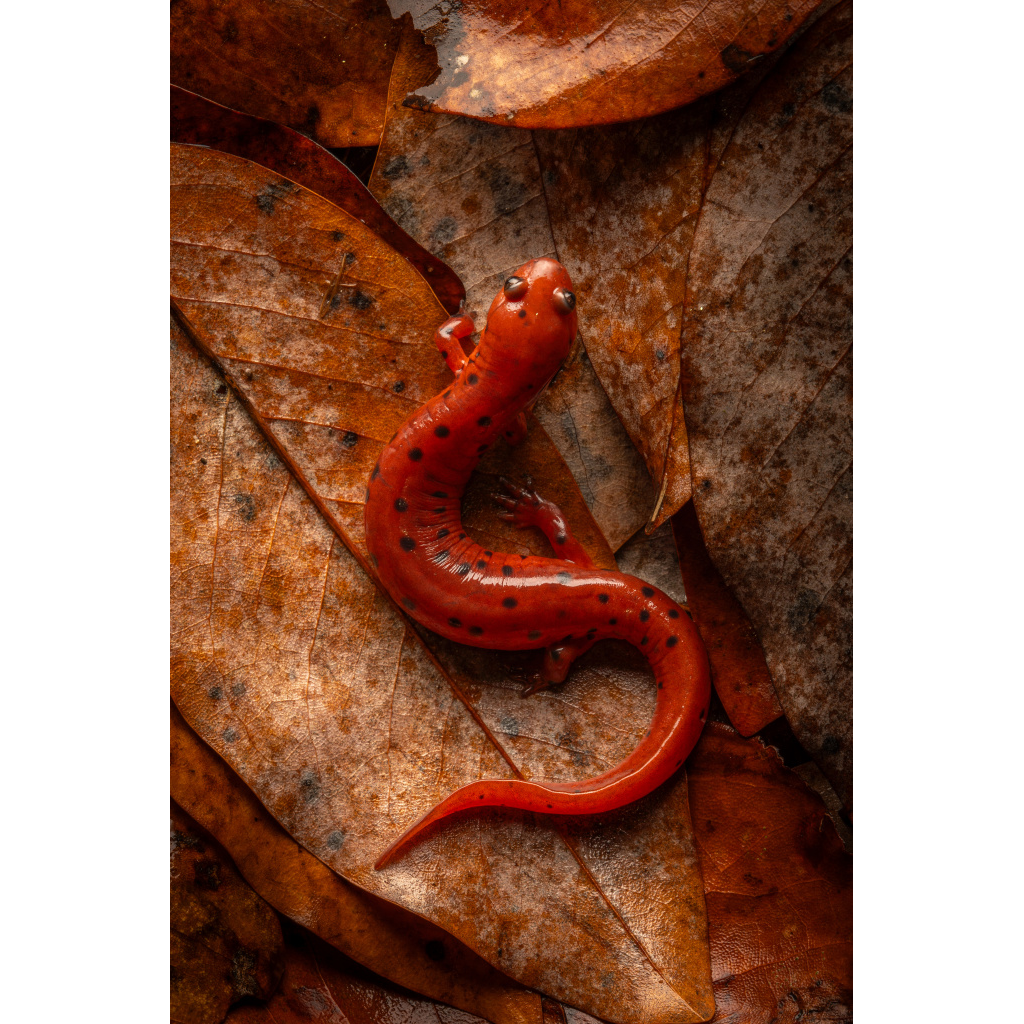
Mud Salamander
from $13.95
(Pseudotriton montanus)
The eastern mud salamander may just be the most photogenic salamander around. They can be found under logs and rocks in wetlands and creeks. They feed on earthworms, insects, and even other salamanders. The eastern mud salamander is easily one of my favorites in the state. Their beautiful colors, and plump figure never get old.

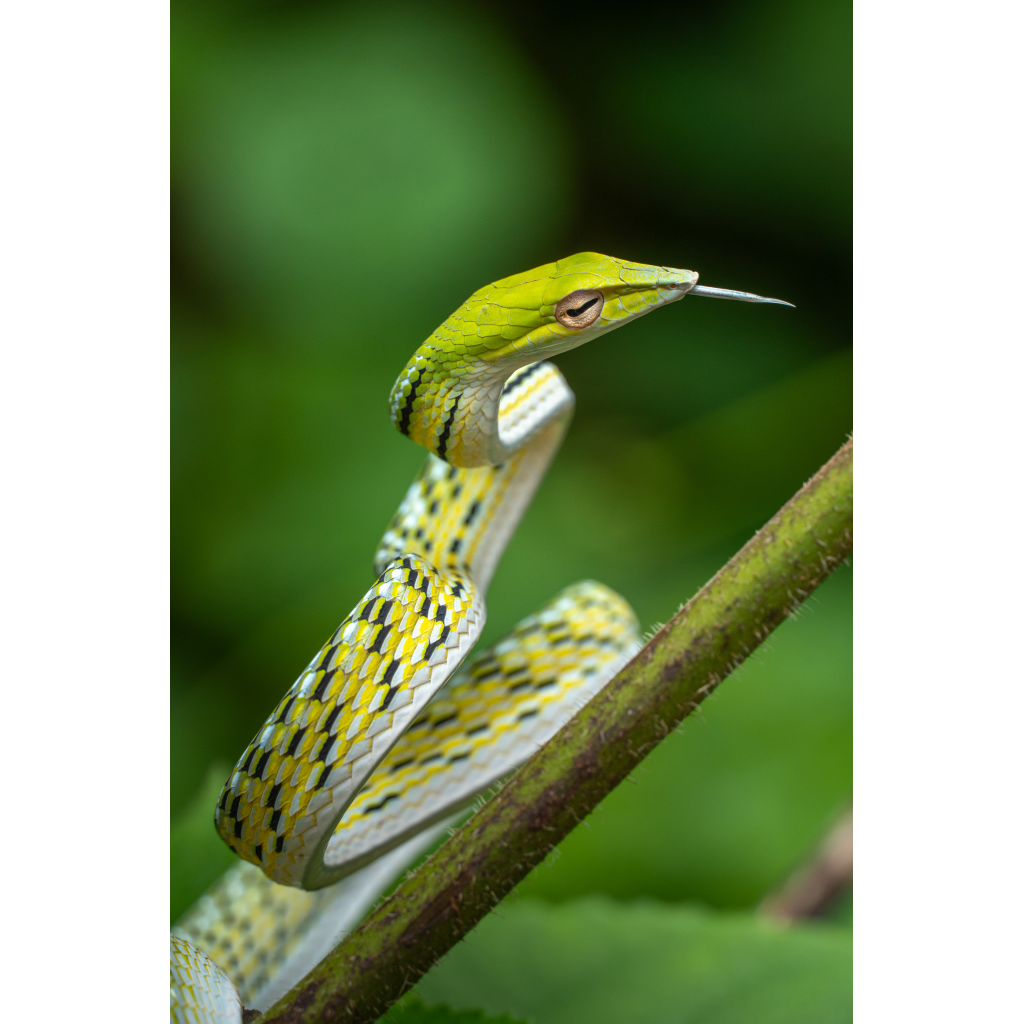
Oriental Whip Snake
from $13.95
(Ahaetulla prahsina)
Though they are fairly common in Thailand, the Oriental whip snake is one that was high on my list for my trip to Asia in 2023. I used to fantasize about finding this species as a kid. Somewhere, in an old sketch book, I still have a picture of one that I drew when I was very young. Of the Ahaetulla that I found, this was in my opinion, the most beautiful. Its color consisted of vibrant greens towards its head, and a steel blue color towards the tail. Im very pleased to have captured these photos of one of my favorite snakes!
The Oriental whip snake is a mildly venomous, arboreal, diurnal snake found in parts of Asia. Unlike most snakes, the oriental whip snake has pupils that are horizontally elongated. The species can grow to nearly 2 meters in length, and it feeds primarily on lizards, frogs and birds.


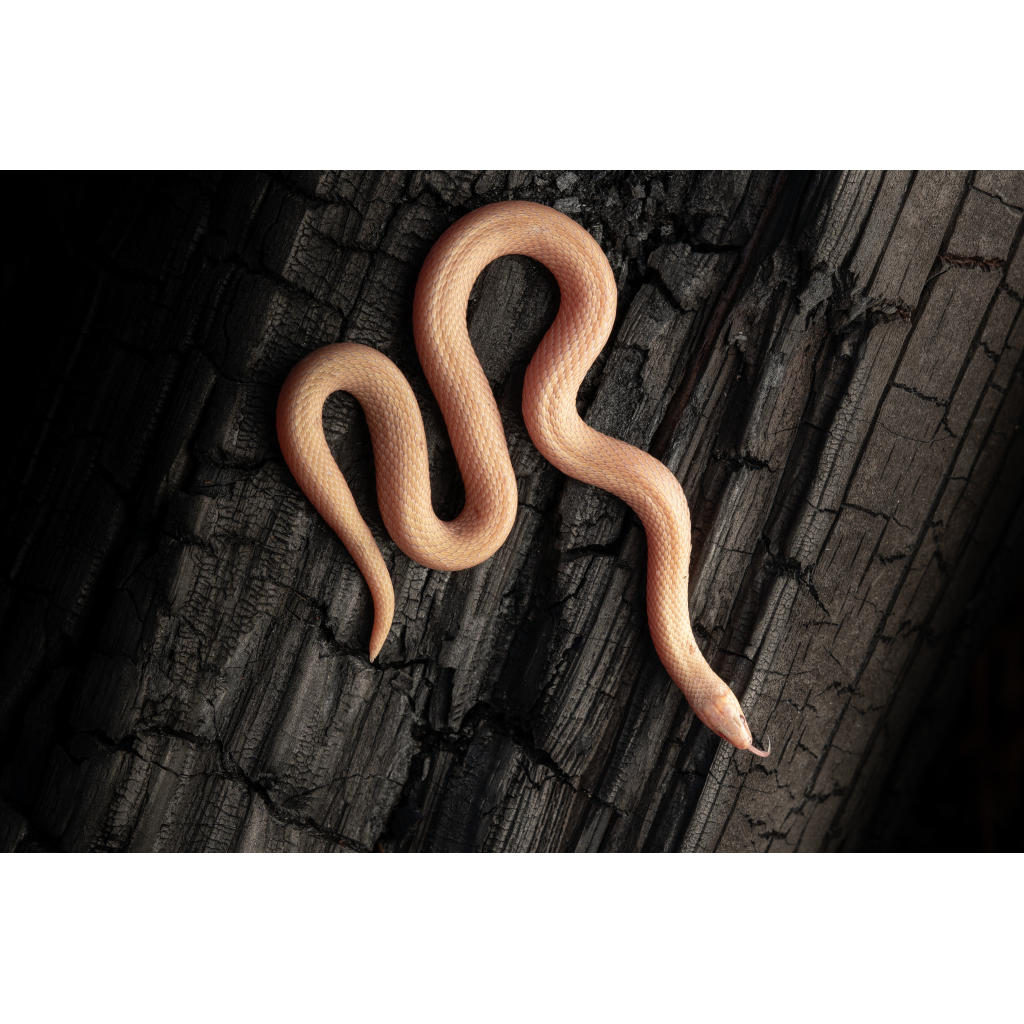
Wild Albino Rough Earthsnake
from $13.95
(Virginia striatula)
This species is one that I have found hundreds of times over the years in the rock piles behind my house alone. But this individual is very special. This rough earthsnake is the first snake I have found with Amelanism! Amelanism is a genetic mutation which causes an animal to lack pigment in its skin, causing it to appear much lighter than the rest of its species, or even white as paper. Rough earth snakes are most often a shade of brown, but this one, a very faint peach color. I immediately knew we had found something special. While snakes with this mutation are abundant in the pet trade, wild snakes with amelanism are exceedingly rare. I will likely never see an earth snake like this one again. This will forever be one of my most prized wildlife encounters.


Eastern Kingsnake
from $13.95
(Lampropeltis getula)
The eastern kingsnake is a species in the genus, Lampropeltis, which is a large genus of snakes that includes both milksnakes and kingsnakes. Kingsnakes get their name from their ability to prey on other snakes, including venomous species. They are immune to the venom of many deadly snakes, such as rattlesnakes.


Sierra Nevada Ensatina
from $13.95
(Ensatina eschscholtzii platensis)
Beneath the enormous redwoods of California, can be found an equally beautiful spectacle. The Sierra Nevada Ensatina is a salamander in the genus, Ensatina, A group of salamanders that inhabit much of the western coast of North America. This subspecies in particular, inhabits only a thin strip of California.


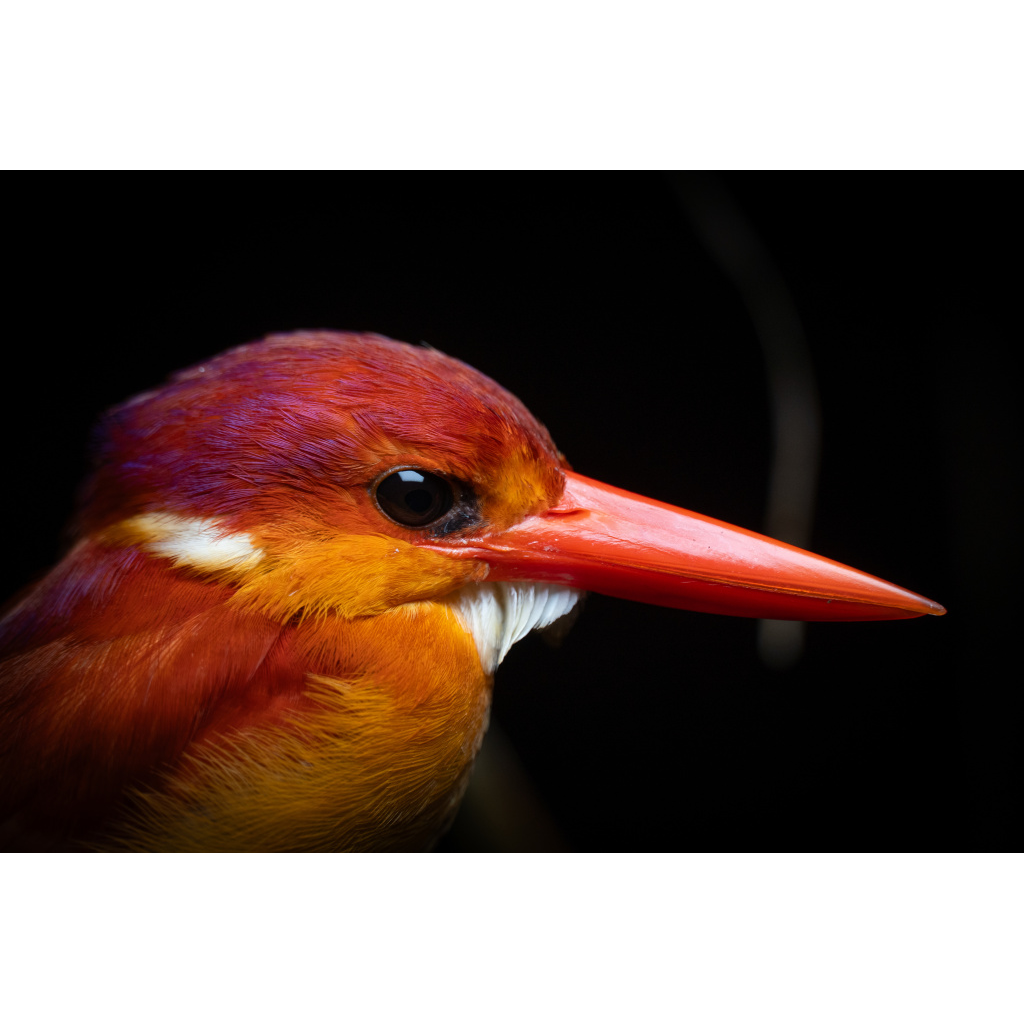
Rufous-backed Dwarf-Kingfisher
from $13.95
(Ceyx rufidorsa)
While wandering up a stream in East Nusa Tenggara, Indonesia on the hunt for snakes, I glanced up to an eye level branch and spotted something rather unexpected, this incredible kingfisher. What was even more surprising to me, is that it sat still as I snapped a few photos from arms length. Some have described to me their immense struggle to find this bird in the wild, let alone get a photo of it. I do not take this moment for granted.
This small but fierce bird is known to prey upon a variety of forest critters. It waits patiently on a limb, often above a stream or mangrove, for an unsuspecting insect, fish, lizard, or even crab to swim or walk by. The kingfisher will then swoop down and grab its victim in the blink of an eye.


Eastern Coachwhip Snake
from $13.95
(Masticophis flagellum) This incredible species was given its name because of the scales on its tail, which closely resemble a braided whip. The species can be found in many states in the Southeast. Eastern coachwhips from the northeastern parts of their range are black towards the head and tan towards the tail, while specimens further west or south almost completely tan. In this image, I captured the full color gradient of the snake. The eastern coachwhip is one of the most intelligent and aware snakes in country. The coachwhip is the only snake in the country that comes close to the indigo in length, having been recorded at 8.5 feet. They may not be the largest snake in the East, but they are certainly the fastest!


Mabee's Salamander
from $13.95
(Ambystoma mabeei)
The mabee's salamander is a species in the genus, Ambystoma, a genus of salamanders that can be found in the thousands crossing roads through their habitat on warm rainy nights in late fall to early spring.


Wagler's Pit Viper
from $13.95
(Tropidolaemus wagleri)
The Wagler's pit viper is a species I had always dreamed of finding in the wild. It's beauty is among the best of all vipers. It inhabits the southern portion of Southeast Asia, where it feeds on rodents and bird, as well as frogs and lizards. Wagler's pit vipers are sexually dimorphic, meaning that the males and females of the species can look vastly different. Males are mostly green with small red and white dots and stripes, while females, pictured here, appear as if a painter splattered green, yellow, and white on a black canvas. Adult males are a fraction of the weight of adult females.

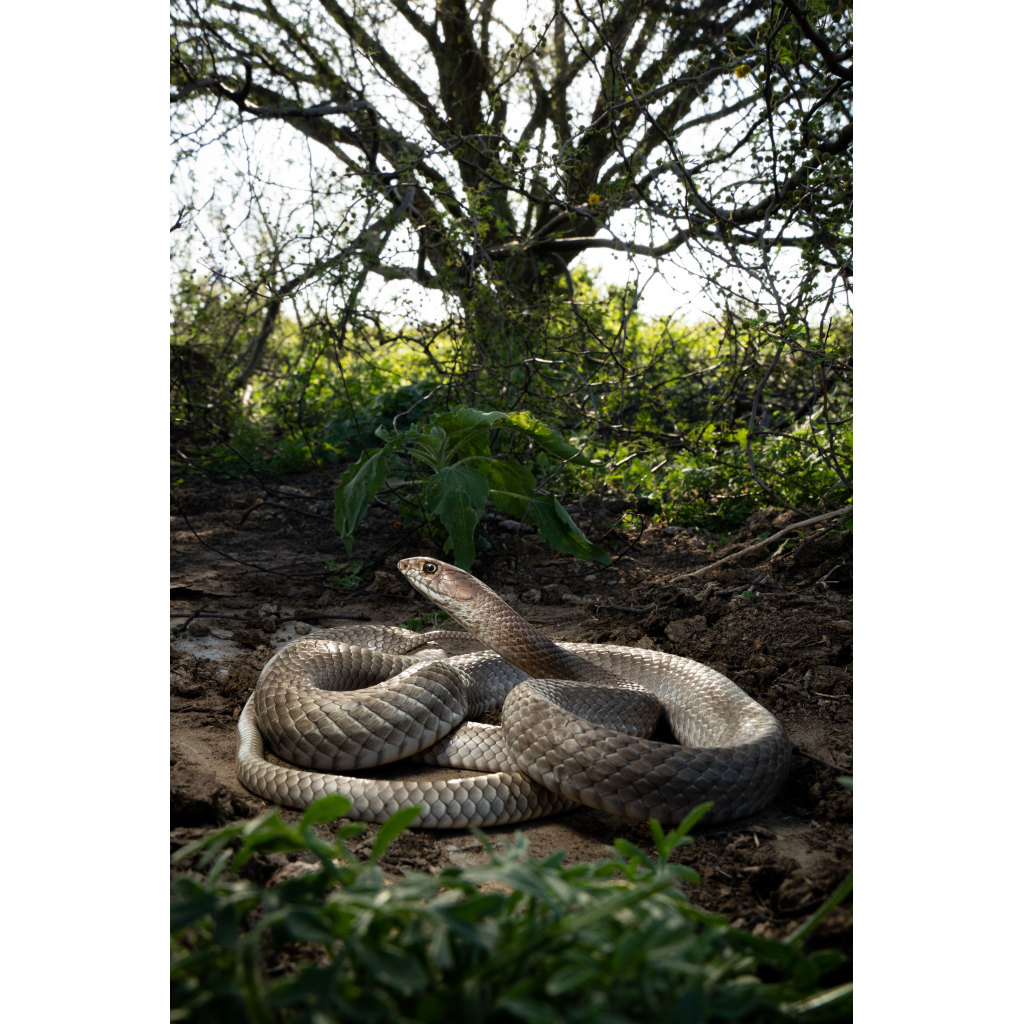
Western Coachwhip
from $13.95
(Masticophis flagellum testaceus)
The coachwhip gets it's name from the pattern of the scales on its tail, which resemble a braided whip. Its beauty, size and speed have always intrigued me. Western coachwhips have been recorded at an impressive length of more than 8 feet. These snakes feed on lizards, birds and a variety of other animals, including other snakes. They have a wide range of color and pattern variation, from hot pink, to dark brown, or off-white.

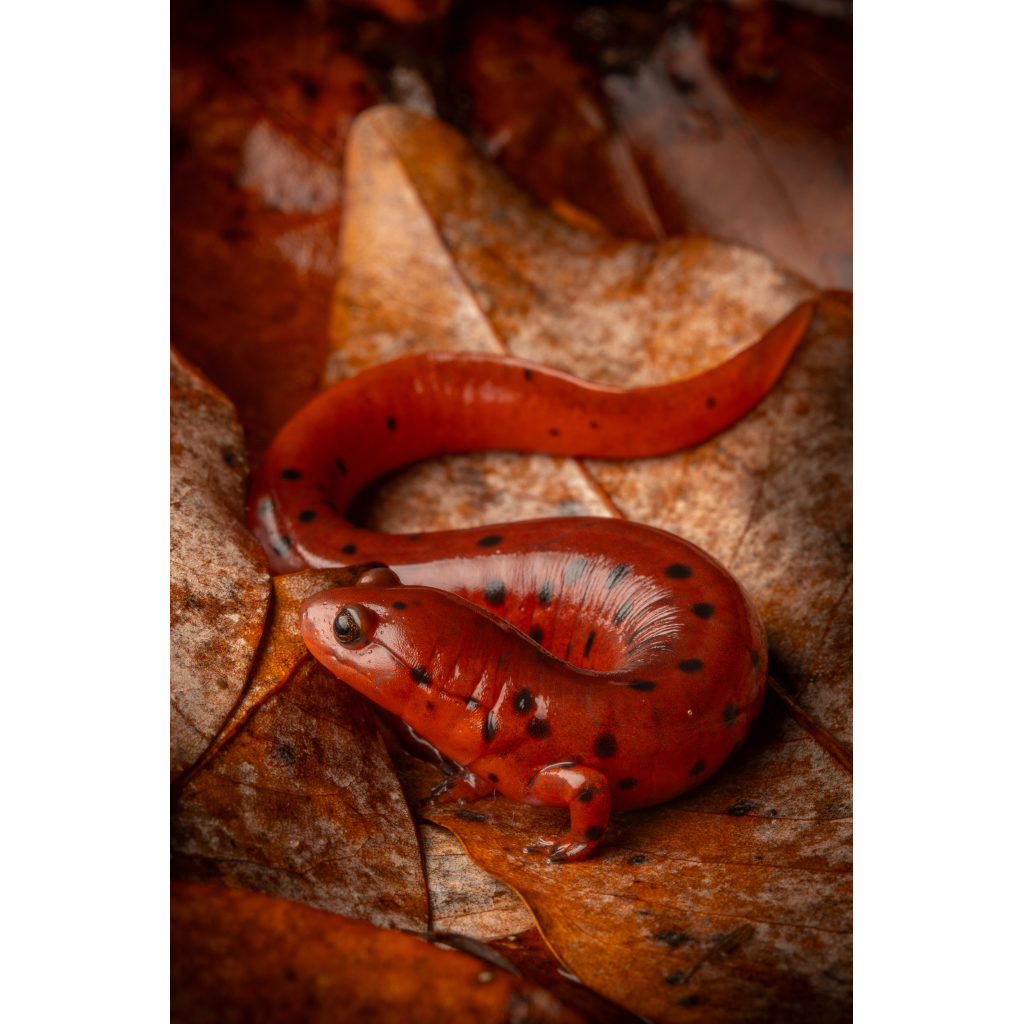
Mud Salamander
from $13.95
(Pseudotriton montanus)
The eastern mud salamander may just be the most photogenic salamander around. They can be found under logs and rocks in wetlands and creeks. They feed on earthworms, insects, and even other salamanders. The eastern mud salamander is easily one of my favorites in the state. Their beautiful colors, and plump figure never get old.


Wood Frog
from $13.95
(Psuedacris crucifer)
The spring peeper is a species which many who grew up in the eastern half of the North American continent may have heard on a spring camping trip, or hike through the forest. Their call is a high-pitched “peep” sound that can be as loud as a call from a songbird many times the size of this minute frog, which weighs only a few grams. During the spring, thousands of these frogs make their way to the vernal pools. Once there, the males will call day and night until they have found a female to reproduce with.


Long-tailed Salamander
from $13.95
(Eurycea longicauda)
The long-tailed salamander's tail accounts for over half of the salamander's body length. This species can be found in caves, streams, and ponds. It feeds on small invertebrates, such as crickets and springtails.

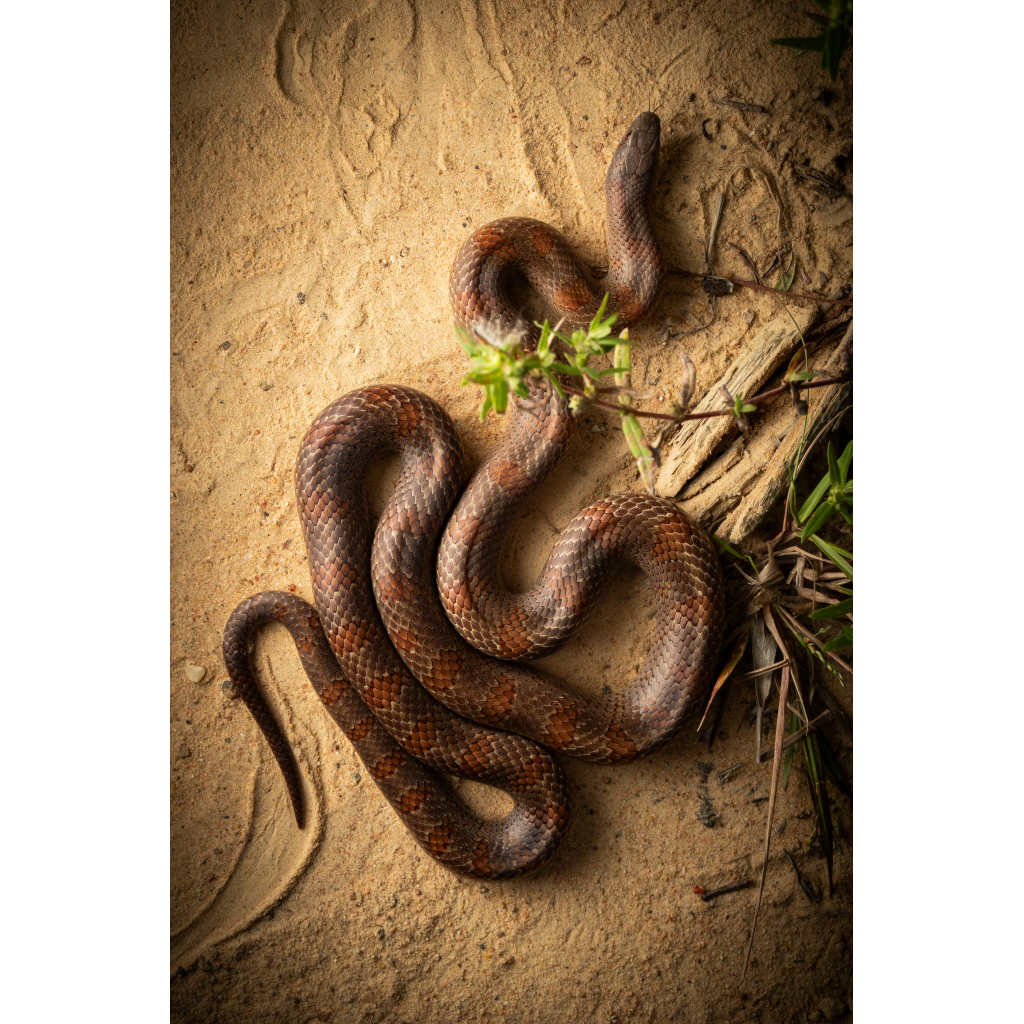
Mole Kingsnake
from $13.95
(Lampropeltis calligaster)
The mole kingsnake is a species which is highly sought after due to its elusive nature. The species spends the majority of its time underground and out of sight. Kingsnakes get their name from their ability to prey on other snakes, including venomous species. They are immune to the venom of many deadly snakes, such as rattlesnakes.


Wagler's Pit Viper
from $13.95
(Tropidolaemus wagleri)
The Wagler's pit viper is a species I had always dreamed of finding in the wild. It's beauty is among the best of all vipers. It inhabits the southern portion of Southeast Asia, where it feeds on rodents and bird, as well as frogs and lizards. Wagler's pit vipers are sexually dimorphic, meaning that the males and females of the species can look vastly different. Males are mostly green with small red and white dots and stripes, while females, pictured here, appear as if a painter splattered green, yellow, and white on a black canvas. Adult males are a fraction of the weight of adult females.


Mole Kingsnake
from $13.95
(Lampropeltis calligaster)
The mole kingsnake is a species which is highly sought after due to its elusive nature. The species spends the majority of its time underground and out of sight. Kingsnakes get their name from their ability to prey on other snakes, including venomous species. They are immune to the venom of many deadly snakes, such as rattlesnakes.


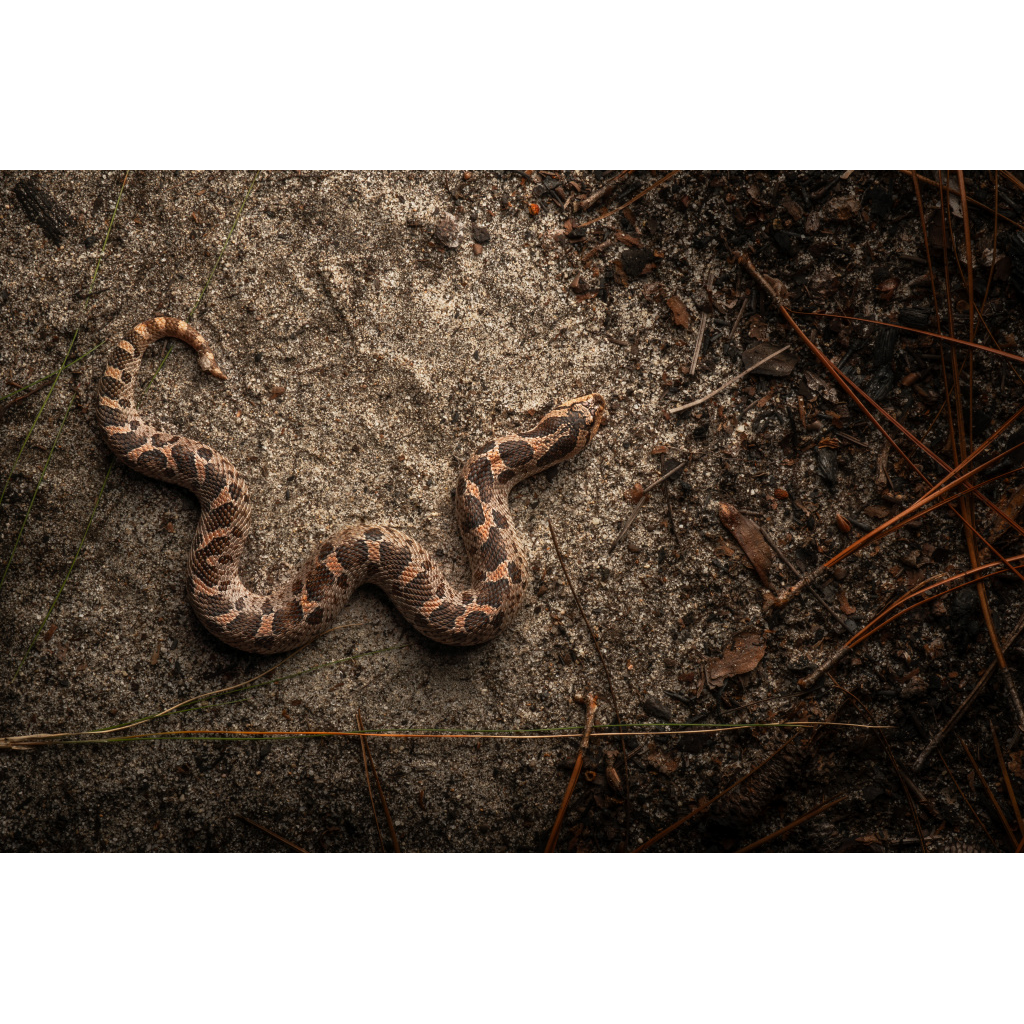
Southern Hognose Snake
from $13.95
(Heterodon simus)
The southern hognose is a snake that many dream of finding in the wild. The species has a limited range, based on habitat preferences, and can be very elusive. Once found by a predator or, a wildlife enthusiast, they southern hognose will often roll over, stick its tongue out and release a pungent musk in order to convince any creature that wants to eat it that is nothing but a rotting corpse. However, if it is rolled up right, it will continuously roll onto its back, not very convincing.


Eastern Indigo Snake
from $13.95
The Eastern indigo snake is the longest snake native to the US. It can reach lengths of almost 9 feet long. They are found in the southeastern united states where they feed mainly on small mammals, but also on a variety of other creatures such as lizards and even other snakes. Because of their size, the indigo snake has very few natural predators, making this species the true emperor of the forest.

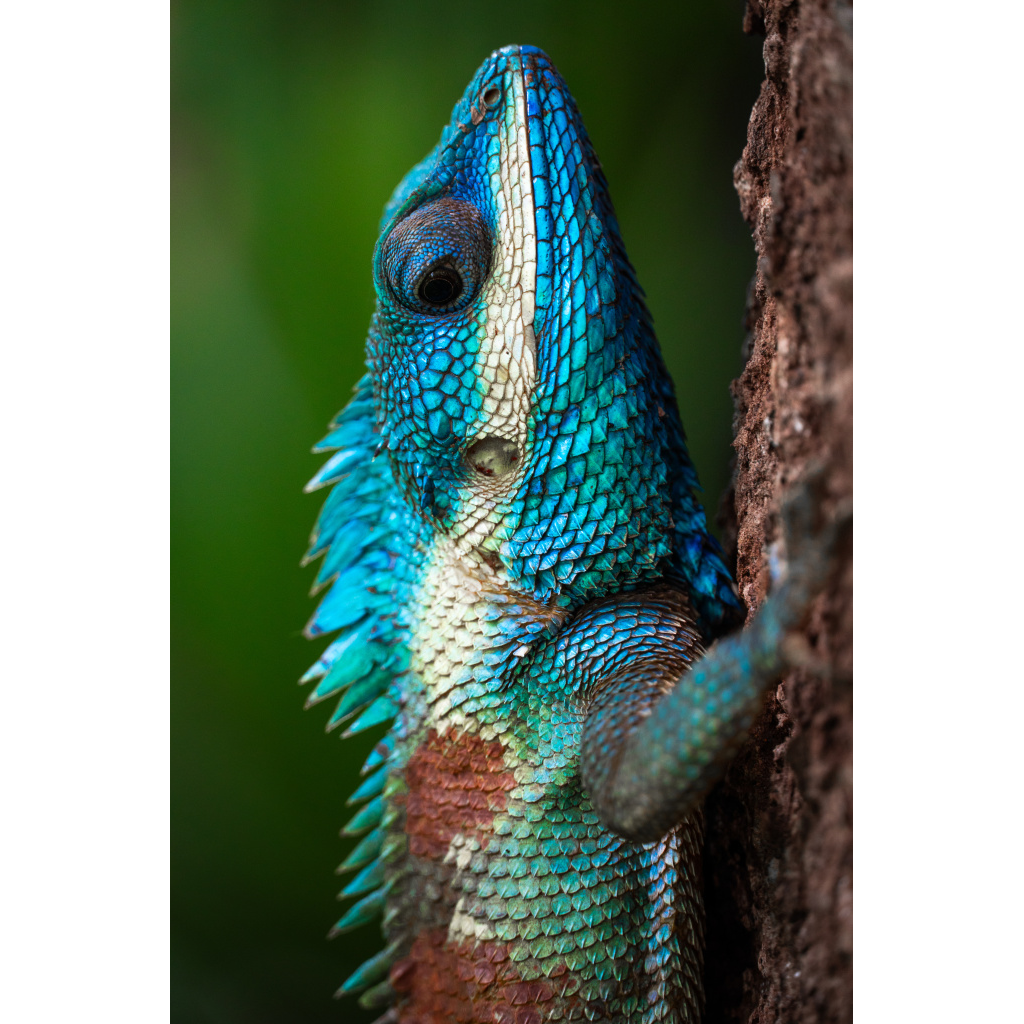
Blue Crested Lizard
from $13.95
(Calotes mystaceus)
The blue crested lizard is one of the most vibrant, breath-taking lizards I have ever come across. They are found in Southeast Asia and parts of China as well as parts of India. This individual from Pai, Thailand stopped me in my tracks with my jaw dropped. Being that blue is the rarest color found in nature, it is truly a treat to find an animal with such beautiful blue coloration.

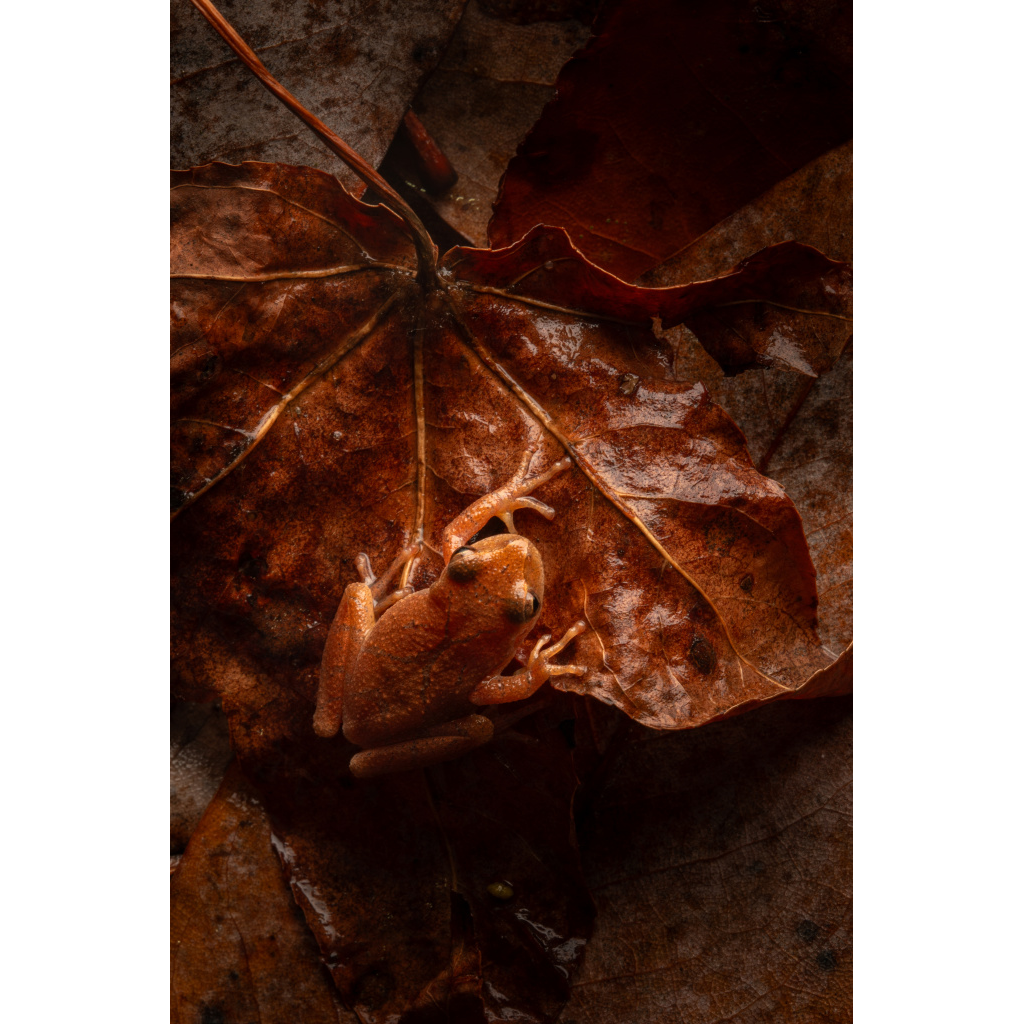
Spring Peeper
from $13.95
(Psuedacris crucifer)
The spring peeper is a species which many who grew up in the eastern half of the North American continent may have heard on a spring camping trip, or hike through the forest. Their call is a high-pitched “peep” sound that can be as loud as a call from a songbird many times the size of this minute frog, which weighs only a few grams. During the spring, thousands of these frogs make their way to the vernal pools. Once there, the males will call day and night until they have found a female to reproduce with.


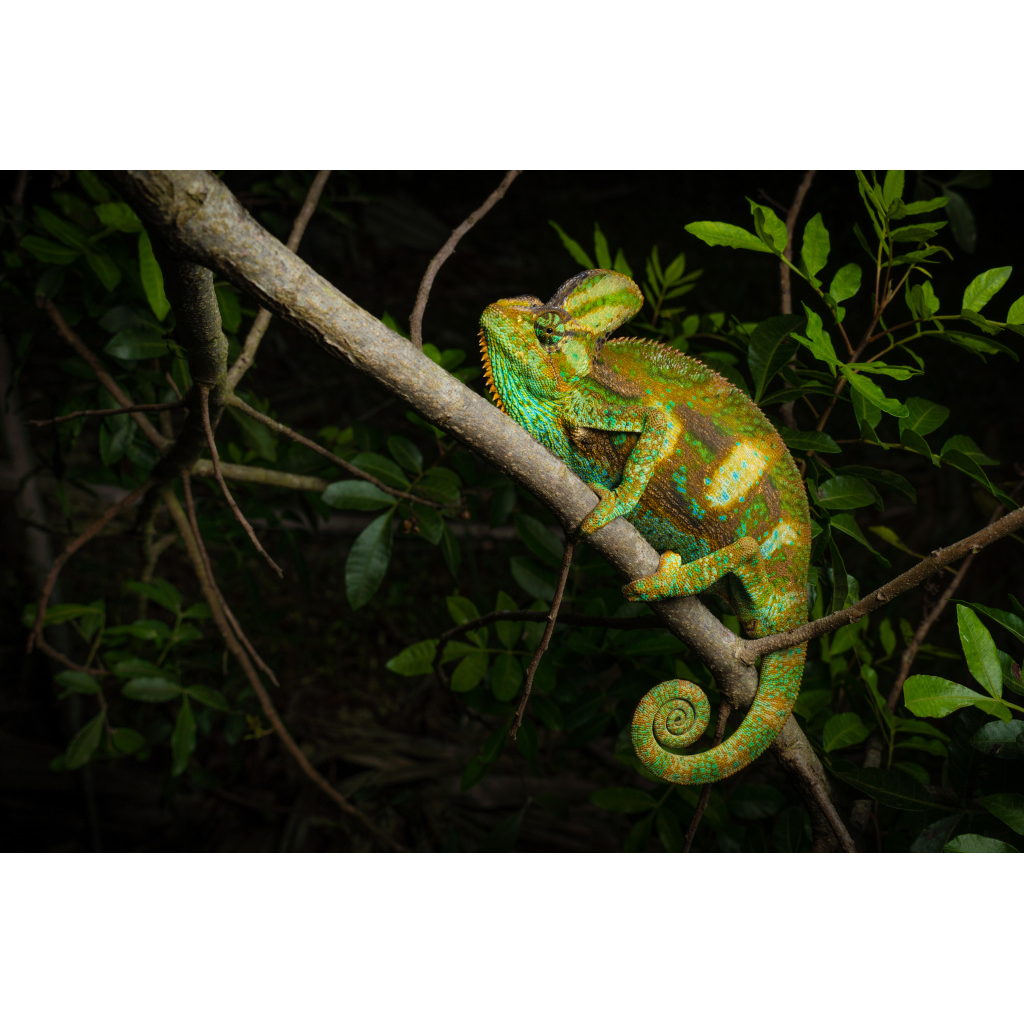
Veiled Chameleon
from $13.95
(Chamaeleo calyptratus)
The veiled chameleon is one of Florida’s most visually impressive non-native species. This species is native to the Arabian peninsula and was first introduced to Florida through the pet trade. Now, after recognizing the profit that can be made by collecting and selling Florida’s wild chameleons, “Chameleon ranchers” have started collecting a handful from one area and illegally releasing them in another, in hopes that they will reproduce enough that the ranchers can return and collect specimens from this new population of chameleons in order to sell them. After no more than a minute of searching, I found our first chameleon, followed by 9 more in the next half hour. This goes to show how well chameleons thrive in the habitat that southern Florida reluctantly offers them. Though these chameleons are a non-native species, they are not as detrimental to the area’s native species as many other non-native species in Florida, and are near the bottom of the FWC’s removal priority list. These chameleons are not going anywhere soon.

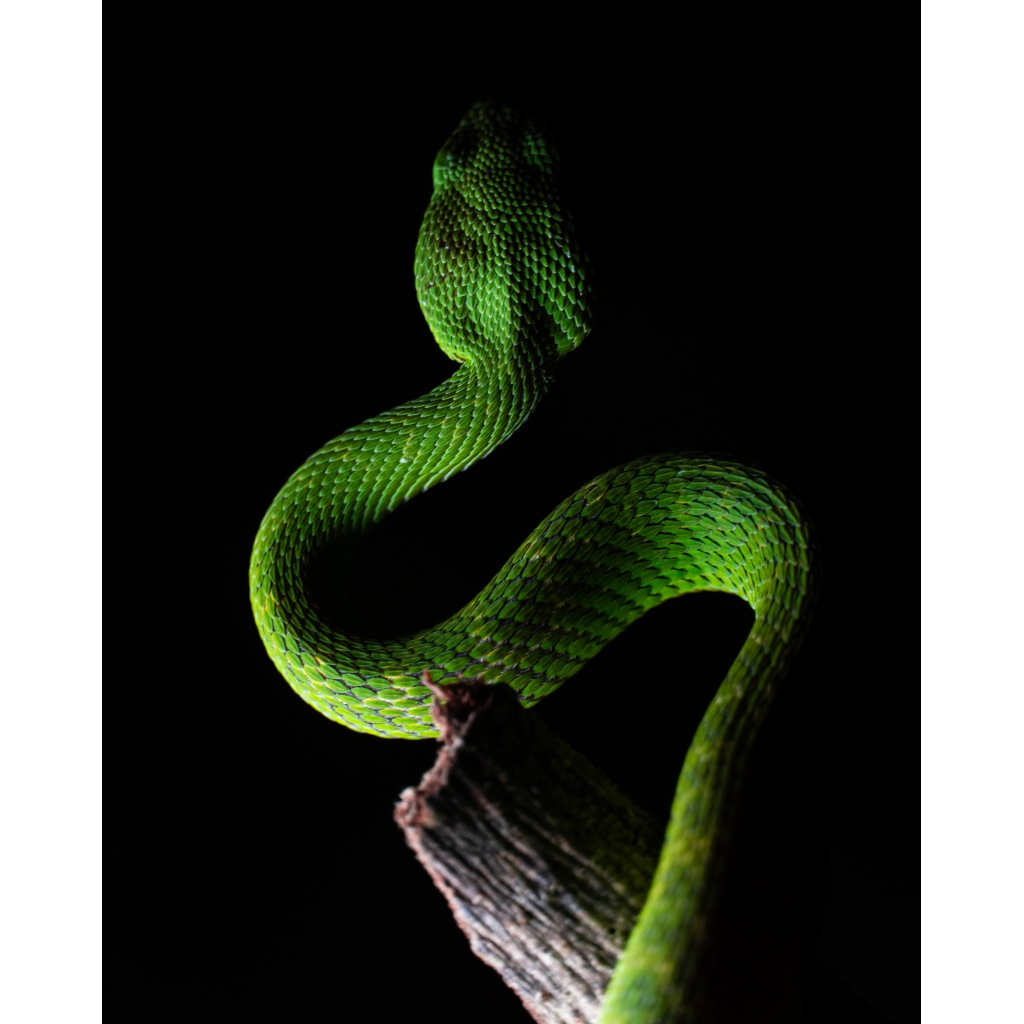
White-lipped Island Pit Viper
from $10.95
(Trimeresurus insularis)
This incredible species of pit viper from Indonesia is one that is incredibly sought after. Its color can consist of solid blue, green, yellow, or tan.


Twin Slug Snake
from $13.95
(Pareas geminatus)
The twin slug snake is a small species of snake from Southeast Asia. It has a fair amount of pattern variability. The species can be orange with black lines and splotches, or it can be completely patternless. It feeds primarily on slugs.


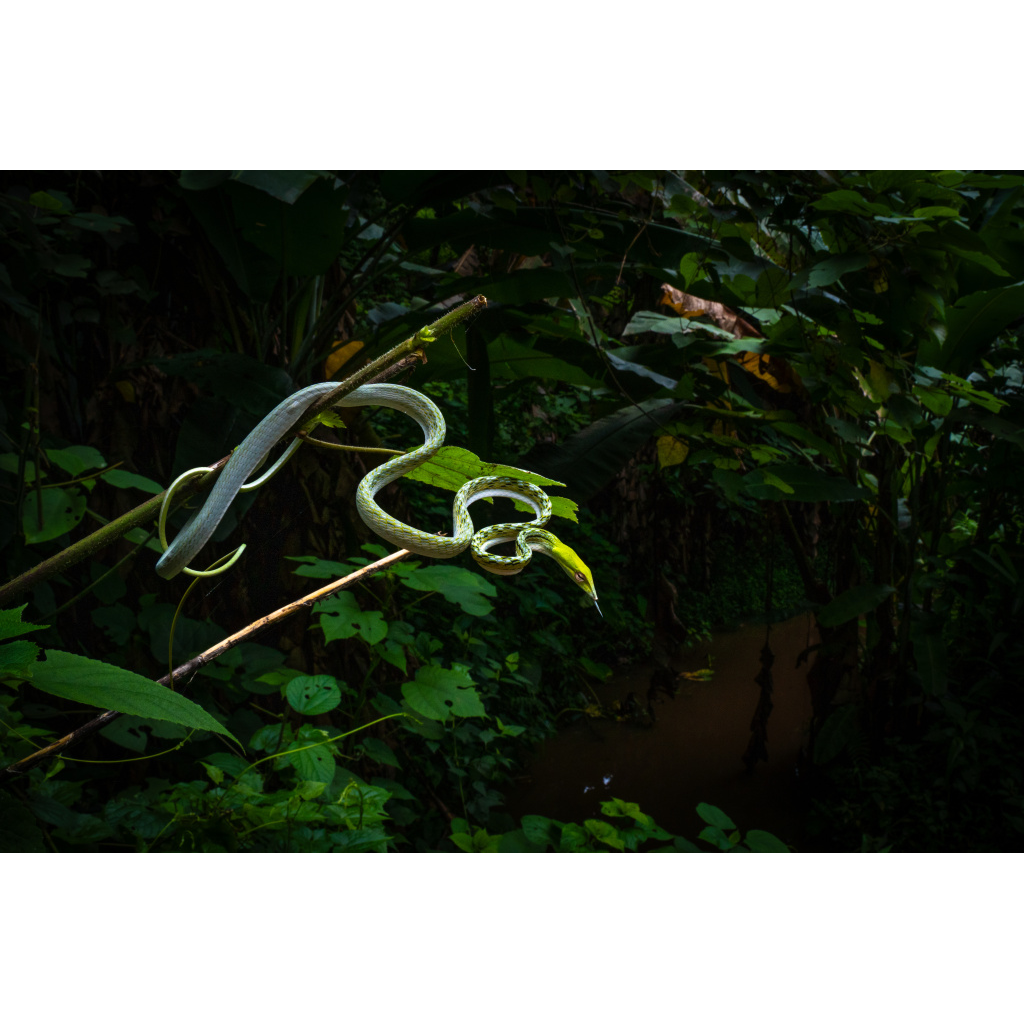
Oriental Whip Snake
from $13.95
(Ahaetulla prahsina)
Though they are fairly common in Thailand, the Oriental whip snake is one that was high on my list for my trip to Asia in 2023. I used to fantasize about finding this species as a kid. Somewhere, in an old sketch book, I still have a picture of one that I drew when I was very young. Of the Ahaetulla that I found, this was in my opinion, the most beautiful. Its color consisted of vibrant greens towards its head, and a steel blue color towards the tail. Im very pleased to have captured these photos of one of my favorite snakes!
The Oriental whip snake is a mildly venomous, arboreal, diurnal snake found in parts of Asia. Unlike most snakes, the oriental whip snake has pupils that are horizontally elongated. The species can grow to nearly 2 meters in length, and it feeds primarily on lizards, frogs and birds.


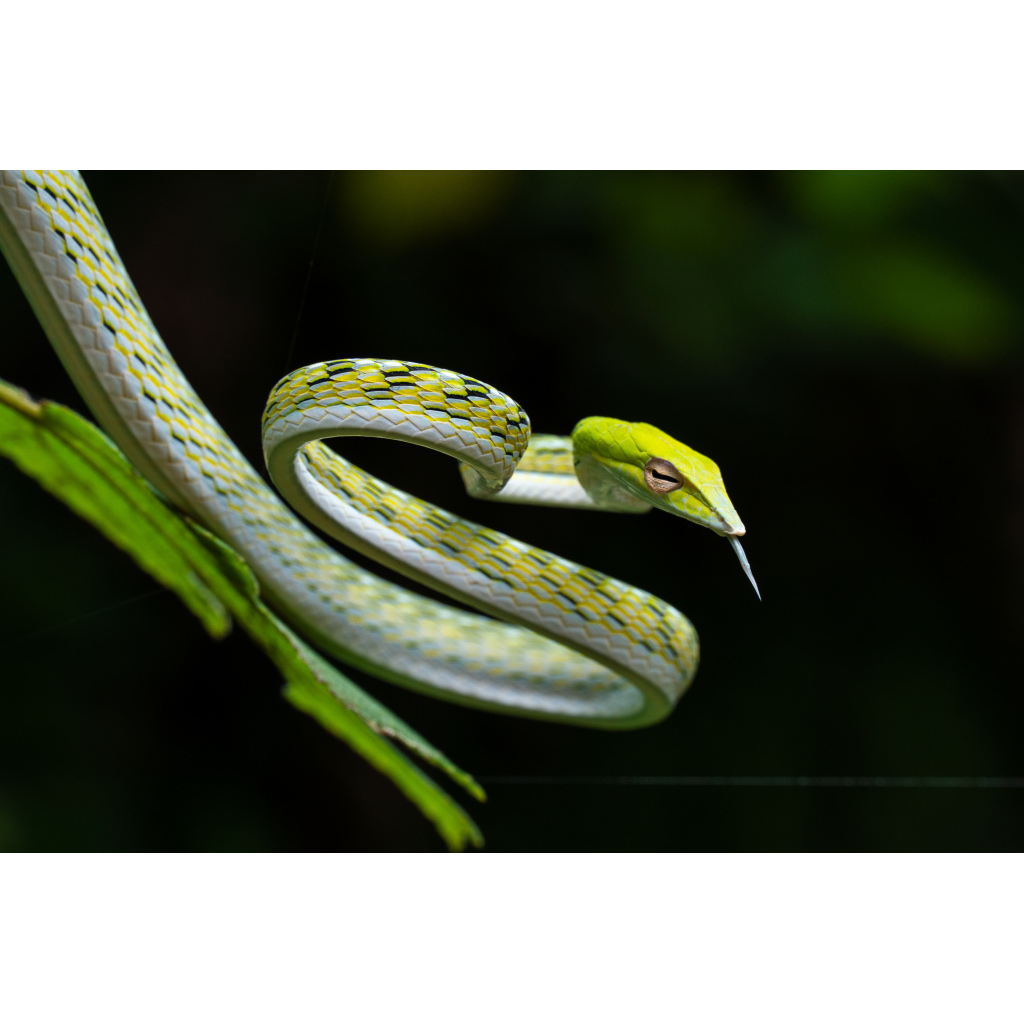
Oriental Whip Snake
from $13.95
(Ahaetulla prahsina)
Though they are fairly common in Thailand, the Oriental whip snake is one that was high on my list for my trip to Asia in 2023. I used to fantasize about finding this species as a kid. Somewhere, in an old sketch book, I still have a picture of one that I drew when I was very young. Of the Ahaetulla that I found, this was in my opinion, the most beautiful. Its color consisted of vibrant greens towards its head, and a steel blue color towards the tail. Im very pleased to have captured these photos of one of my favorite snakes!
The Oriental whip snake is a mildly venomous, arboreal, diurnal snake found in parts of Asia. Unlike most snakes, the oriental whip snake has pupils that are horizontally elongated. The species can grow to nearly 2 meters in length, and it feeds primarily on lizards, frogs and birds.

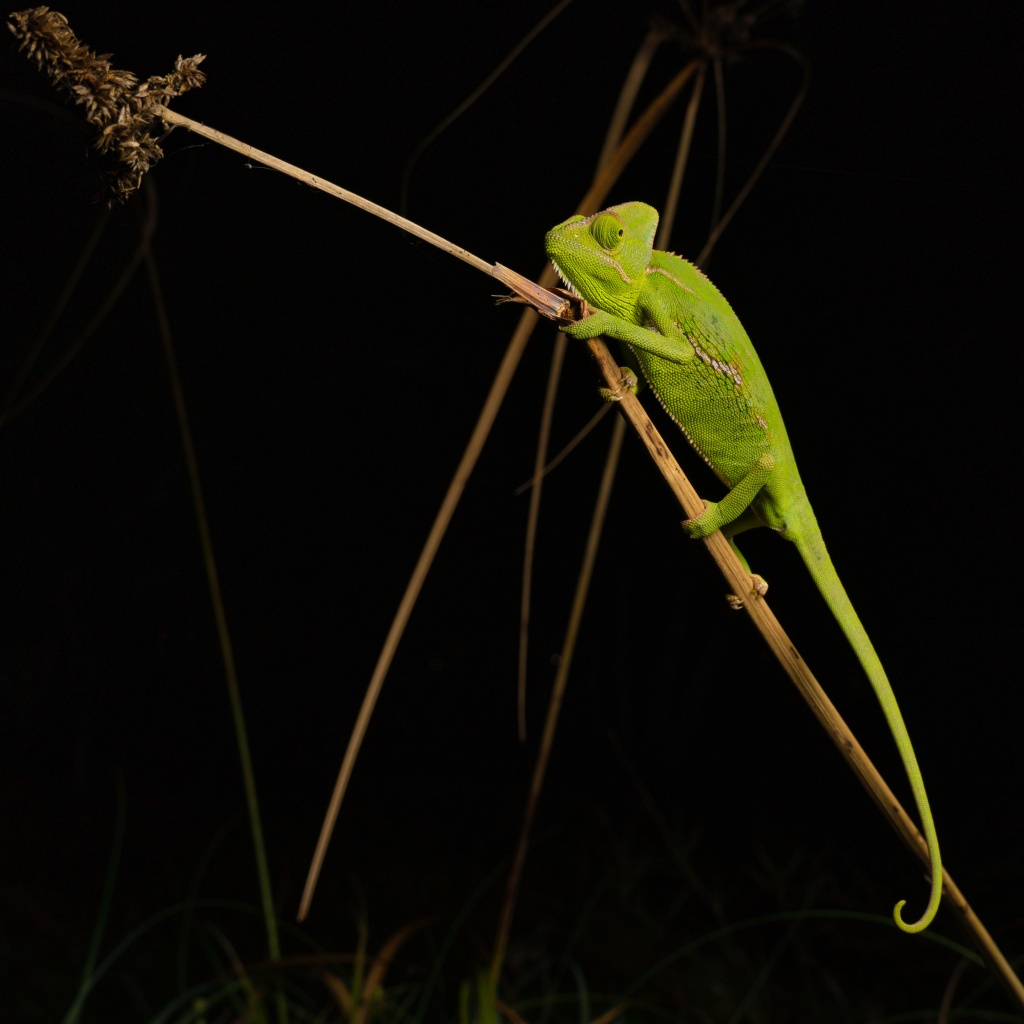
Veiled Chameleon
from $13.95
(Chamaeleo calyptratus)
The veiled chameleon is one of Florida’s most visually impressive non-native species. This species is native to the Arabian peninsula and was first introduced to Florida through the pet trade. Now, after recognizing the profit that can be made by collecting and selling Florida’s wild chameleons, “Chameleon ranchers” have started collecting a handful from one area and illegally releasing them in another, in hopes that they will reproduce enough that the ranchers can return and collect specimens from this new population of chameleons in order to sell them. After no more than a minute of searching, I found our first chameleon, followed by 9 more in the next half hour. This goes to show how well chameleons thrive in the habitat that southern Florida reluctantly offers them. Though these chameleons are a non-native species, they are not as detrimental to the area’s native species as many other non-native species in Florida, and are near the bottom of the FWC’s removal priority list. These chameleons are not going anywhere soon.

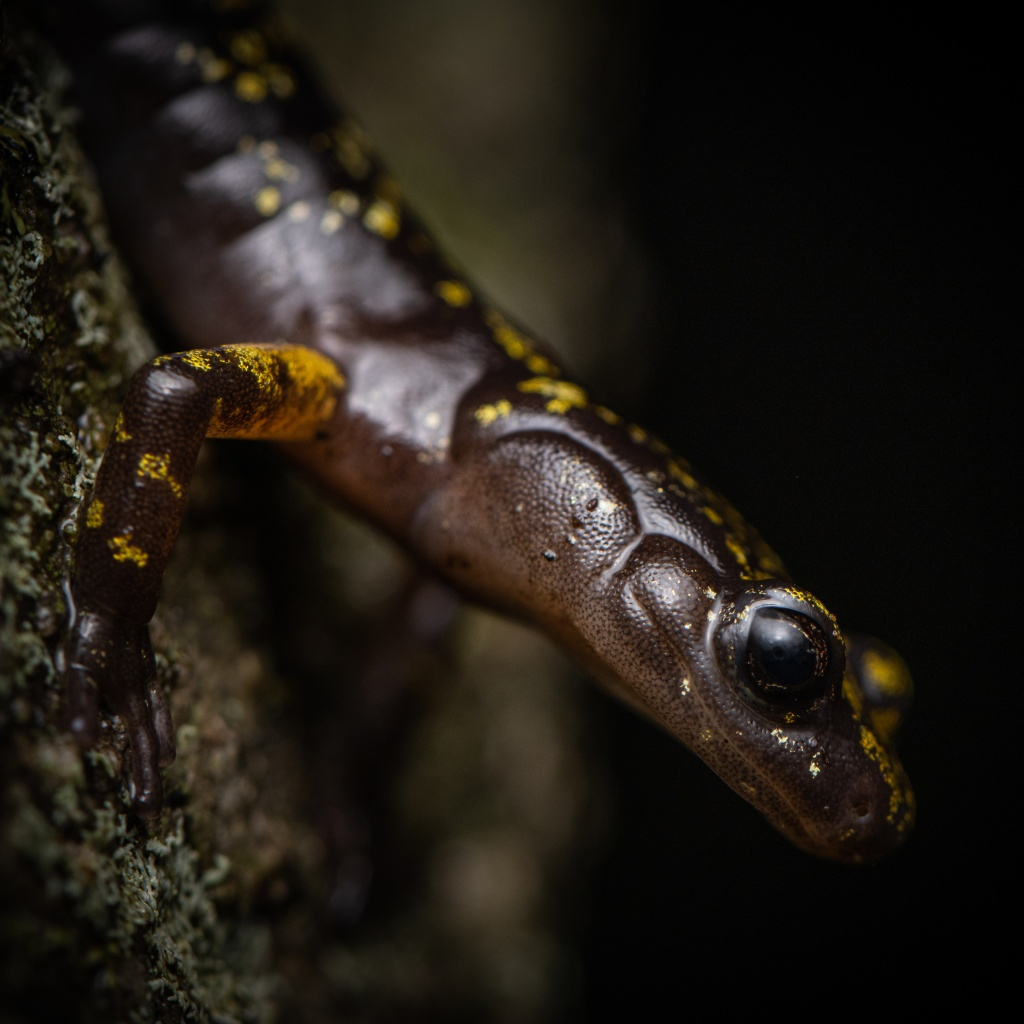
Hickory Nut Gorge Green Salamander
from $13.95
(Aneides caryaensis)
This very special salamander is one of less than two hundred and fifty Hickory Nut Gorge green salamanders left in the world (Apodaca, unpublished data). It is a true gem of the Blue Ridge Mountains. I’m ecstatic to have been able to witness and photograph this species, it may not be around much longer.


Elegant Bronzeback Snake
from $13.95
(Dendrelaphis formosus)
The elegant bronzeback is rarely found on the forest floor. It spends the majority of its time in the trees of Southeast Asia, where it sleeps during the night and hunts lizards during the day. Upon capture, this species will inflate its neck to reveal its incredible blue coloration on the edges of its scales.

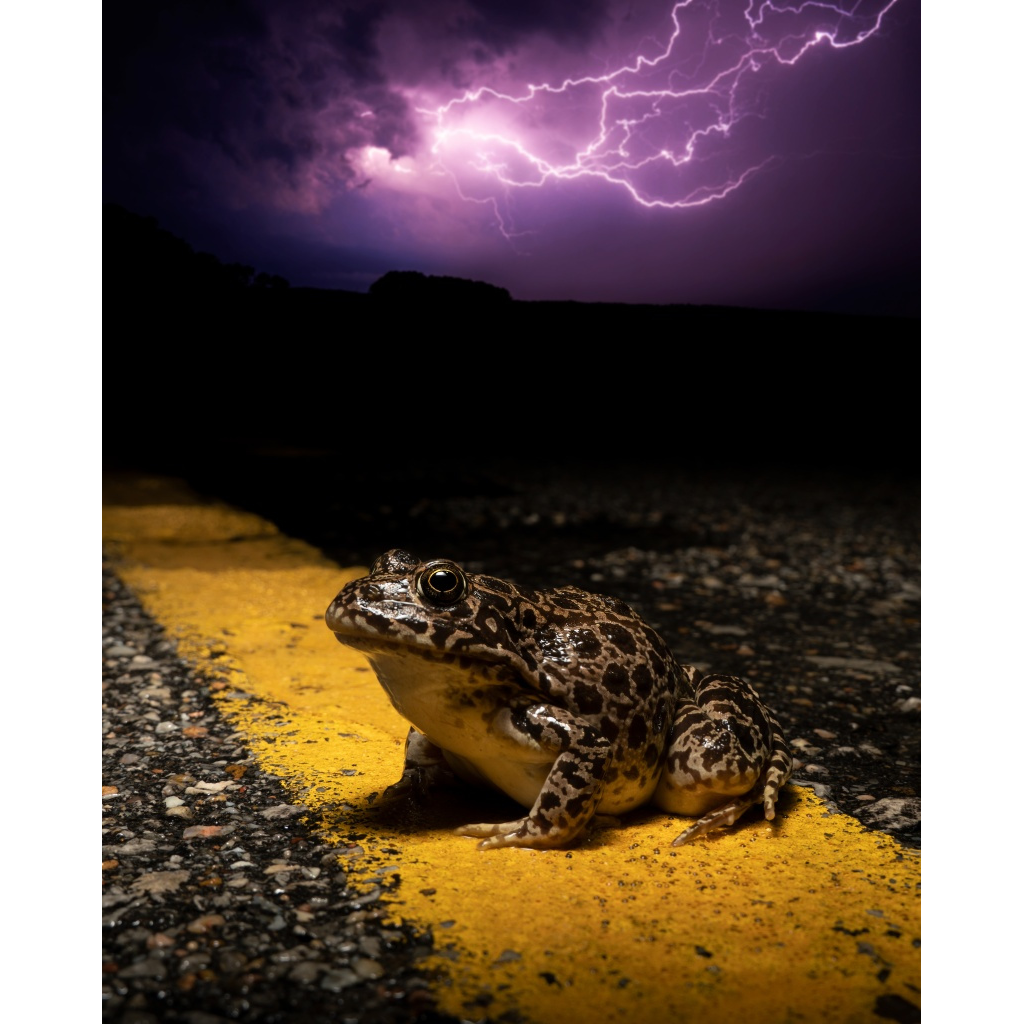
Crawfish Frog
from $10.95
(Lithobates areolatus)
Shortly after crossing into Kansas on a trip in May, my friends and I were engulfed by a massive tornadic thunderstorm. The road faded into the rain, and the rain into hail. Winds felt like waves. But in the tranquility of the storm’s edge, sat this fearless frog.


Western Diamondback Rattlesnake
from $10.95
(Crotalus atrox)
The western diamondback rattlesnake is perhaps the most iconic snake in all of North America. If you have ever seen a snake in an old western movie, it was probably this species. It's sheer size and potent venom are nothing to laugh about. The species inhabits the southwestern United States, as well as the northern half of Mexico, and is the largest rattlesnake in the world.